
About the School

School of Communication Mission Statement

Understanding the complex and ever-changing nature of communication’s vital role in a democratic society, the School of Communication at Florida State University recognizes the need to examine the field from a multitude of theoretical, practical, and creative approaches. We prepare students to be versatile communication practitioners and engaged global citizens through innovative and experiential learning experiences, research and creative scholarship, and service to the discipline, university, and community.
Latest Scholarly Publications

  • Bailey, R., Hmielowski, J., Hutchens, M., Ichplani, P., Sparks, J. F., & Park, S. Y. (2026). You're the apple of my ambivalence: can the primary motivational aspects of GMO foods lessen GMO avoidance?. Journal of Science Communication, 25(3), A02.
  • Karimkhan, F., & Chapa, S. (2025). Why do we buy what they recommend? Investigating the effects of fashion influencers’ source factors on consumer attitudes and purchase intentions. Journal of Applied Marketing Theory, 12(1), 76-98.
  • Clayton, R. B., Park, J., Simon, K., Weinberg, J., Shuvo, M. S. M., Rasul, S., ... & Stevens, E. M. (2025). Investigating psychophysiological and self-report responses to antioral nicotine pouch social media videos. Health Psychology.
  • Diwanji, V. S., Cortese, J., & Lee, J. (2025). Is consumer generated branding the way forward for digital advertising: Examining the effects of message source, presentation format and involvement on consumer decisions on X (formerly Twitter). Journal of Current Issues & Research in Advertising, 46(1), 90-112.
  • Dale, K. R., Fisher, J. T., Liao, J., & Grinberg, E. (2023). The shape of inspiration: Exploring the emotional arcs and self-transcendent elicitors within inspirational movies. Media Psychology, 26(6), 767-789.
  • Ferchaud, A., Johns, A., & Daniel, E. S. (2025). Beloved bingeable breakups? The impact of binge watching on retrospective imaginative involvement, parasocial relationships, and parasocial breakups. Media Psychology, 28(2), 258-279.
  • Lazenby, B. S., & Donovan, E. E. (2026). Barriers to eating disorder management and recovery: an exploration of challenging communication interactions through Reddit discourse. Journal of Applied Communication Research, 1-20.
  • Merle, P. F., Cortese, J., & Diwanji, V. (2024). Measuring the impact of message format about handwashing on behavioural intentions in the first weeks of COVID-19. Journal of Visual Communication in Medicine, 47(1), 21-26.
  • Opel, A., & Schrock, D. (2026). Puppets, community, and cultural intervention: political puppetry in our lives and the world. Text and Performance Quarterly, 46(1), 51-76.
  • Shah, D., & Proffitt, J. M. (2026). Sport as a commercial media spectacle: The case of the “F1: The Movie”. Media, Culture & Society, 01634437261452159.
  • Ray, E. C., Merle, P. F., & Ichplani, P. (2025). " Now I take this seriously": Southeastern Perspectives of the Cone of Uncertainty after a Devastating Hurricane Season. Florida Communication Journal, 50(2).
  • Ray, E. C., Merle, P. F., & Lane, K. (2025). Generating credibility in crisis: Will an AI-scripted response be accepted?. International Journal of Strategic Communication, 19(2), 158-175.
  • Shao, R., Neil, J. M., Chen, M., Hannafon, B., Nipp, R., Montgomery, A., ... & Businelle, M. S. (2026). A mobile health app for real-time symptom monitoring in patients with cancer during COVID-19: feasibility, acceptability, and utility. BMC cancer, 26(1), 408.
  • Yang, Y., Dong, Y., & Shuvo, M. S. M. (2026). Anger Appeal for Mental Health Equity: Racial Identity-Contingent Effects of Anger Appeal and Efficacy Cue. Health Communication, 1-11.
  • Zhao, P., Bazarova, N., & Margolin, D. (2026). Involving AI in Public Moral Dialogue: Can AI Serve as a Legitimate Moral Actor to Address Problematic Online Speech?. Public Moral Dialogue: Can AI Serve as a Legitimate Moral Actor to Address Problematic Online Speech.

School History


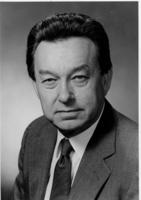
Portrait of Dr. Theodore Clevenger Jr.
Dr. Theodore Clevenger Jr. (1929-1995)

The guiding force behind what is now the School of Communication was Dr. Theodore "Ted" Clevenger, Jr.

Dr. Clevenger earned his doctorate here at FSU in 1957, returned 10 years later as chairman of the Department of Speech within the College of Arts & Sciences, and was named the first dean of the College of Communication in 1976. He left a strong and enduring legacy to the university and to the field of communication research.
Read more about Dr. Clevenger.